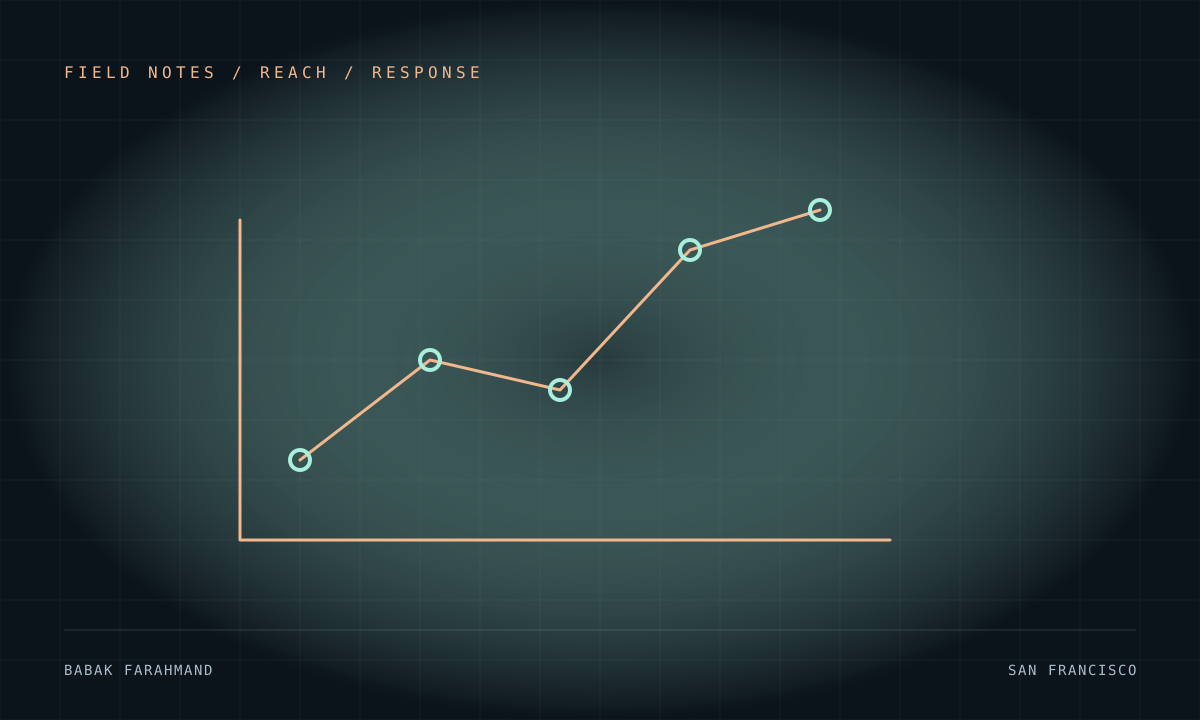
Watching a post's numbers can turn into a very strange hobby. A few more impressions arrive, and suddenly I am trying to explain an entire distribution system from a tiny sample.
The useful lesson from reviewing my own posts has been simpler: being seen and creating a conversation are different outcomes.
Decide what success means
For one post, I might want someone to discover my work. For another, I might want a thoughtful reply, a useful connection, or a reader who comes back for the next article.
An impression does not tell me all of that. Neither does a like.
Looking at several signals together helps: people reached, comments, saves, profile visits, and whether the conversation led anywhere useful. I do not need to turn every post into a dashboard. I do need to remember what I was trying to accomplish.
Treat the next post as an experiment
I want to record the idea, the format, the posting time, and what happened afterward. Then I can change something deliberately rather than rewriting everything because one early screenshot looked disappointing.
Was the opening specific? Did the image help the idea? Was the post trying to do too much? Could a reader tell what kind of response I was inviting?
Those are questions I can work on. Guessing why a platform did something is much less reliable.
Small samples deserve patience
I cannot establish a universal best time or a rule about an algorithm from my own small set of posts. Even when a format seems promising, there are other explanations worth keeping in mind.
What I can do is compare my own experiments, keep useful notes, and avoid treating the first few minutes as a verdict on the entire idea.
Give a reader somewhere to go
A specific opinion or a real question is easier to respond to than a broad request for engagement. If someone offers a thoughtful comment, I want to answer the point they made and keep the conversation open.
That is the result I care about most. The numbers can help me notice it, but they should not replace it.