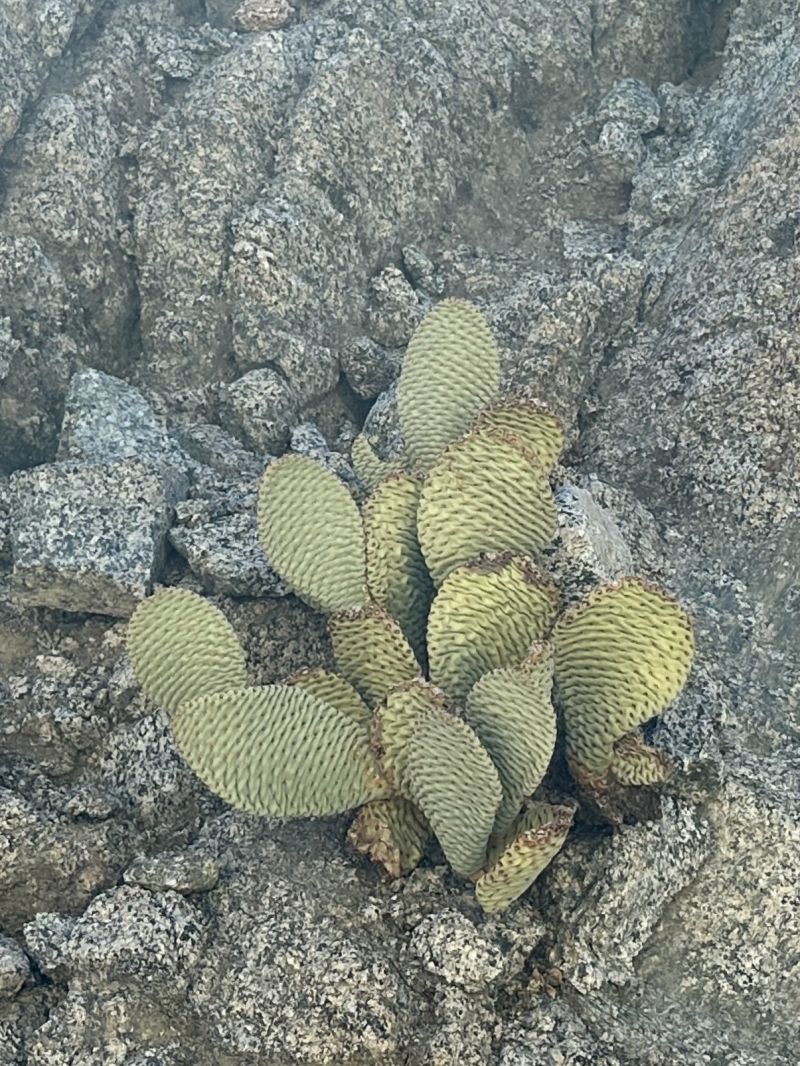
While hiking, I noticed a cactus growing out of what looked like solid mountain. There was no soft soil around it. No carefully prepared garden bed. Just rock; and somehow, life pushing through it.
It reminded me of a lesson I keep relearning: growth rarely waits for ideal conditions.
We like to tell clean stories about progress. First you prepare. Then you find the right opportunity. Then you grow. Real life is usually messier. Sometimes you begin with less money, less language, less certainty, or less support than you think you need. Sometimes the environment does not make room for you. You have to find the smallest opening and start there.
The crack is enough
That cactus did not break the entire mountain at once. It found a crack. It put down roots. It survived one day, then another. Over time, what looked impossible became visible.
The same pattern shows up in careers and in building. You do not need the whole path to open before you take a step. You need one useful conversation, one customer willing to listen, one hour to learn, one person who believes in you, or one imperfect version that works well enough to test.
People often wait for confidence before moving. But confidence is usually the result of movement. The roots come before the proof.
Pressure does not automatically create strength
There is a dangerous version of resilience culture that celebrates suffering for its own sake. That is not what I saw on the mountain. The cactus was not thriving because hardship is noble. It was thriving because it adapted to the conditions without losing the thing it was trying to become.
Resilience is not pretending the rock is comfortable. It is acknowledging the constraint and still looking for the opening. It is changing the route without abandoning the destination. It is asking for help when help exists and conserving energy when it does not.
Sometimes the strongest move is pushing forward. Sometimes it is growing sideways until the conditions change.
Evidence can be small
When a goal feels far away, we tend to dismiss small progress. A new skill, a difficult phone call, a first customer, or a single good week can look insignificant beside the mountain still in front of us. But small evidence matters. It proves that the environment is not completely closed.
That cactus did not conquer the landscape. It occupied one small piece of it. That was enough to change what I believed was possible there.
The next time I catch myself waiting for perfect conditions, I want to remember what I saw: a living thing that found a crack, held its ground, and slowly made space.
It did not ask the mountain for permission to grow.